
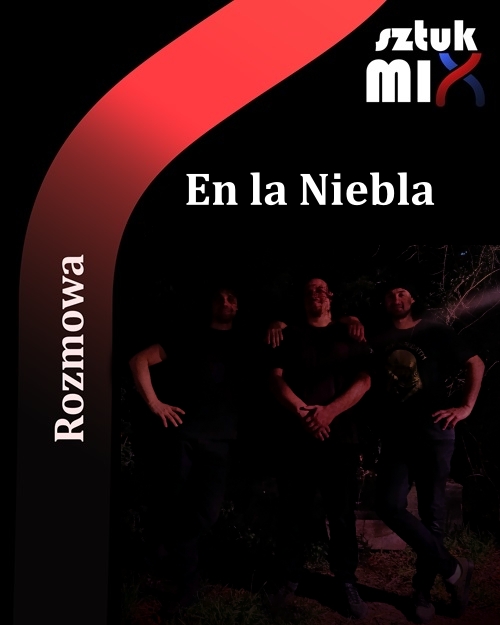
En la Niebla is a stoner/doom metal act from Argentina, who lately released their newest album “Consuelo del infortunio”. In the interview with bass guitarist Matías Ghirlanda we are touching inspiring music and cultural topics related to Argentina: its musical roots, art, architecture, landscape and possible explanation of vampirism fascination in stoner/doom scene. How freemasons inspired the band? How does En la Niebla function despite the long distance between its members? Is there any stoner/doom collective in Argentina? Why are most of the band’s lyrics in Spanish? Is gear of that much importance? What is the meaning behind the name of “En la Niebla”? How much symbolism is hidden in Jules Verne’s books? What are the unique features of the band’s region?
Marek Oleksy: You released your newest album “Consuelo del infortunio” not so long ago. Are you celebrating its release or you still have much work to do with the new album?
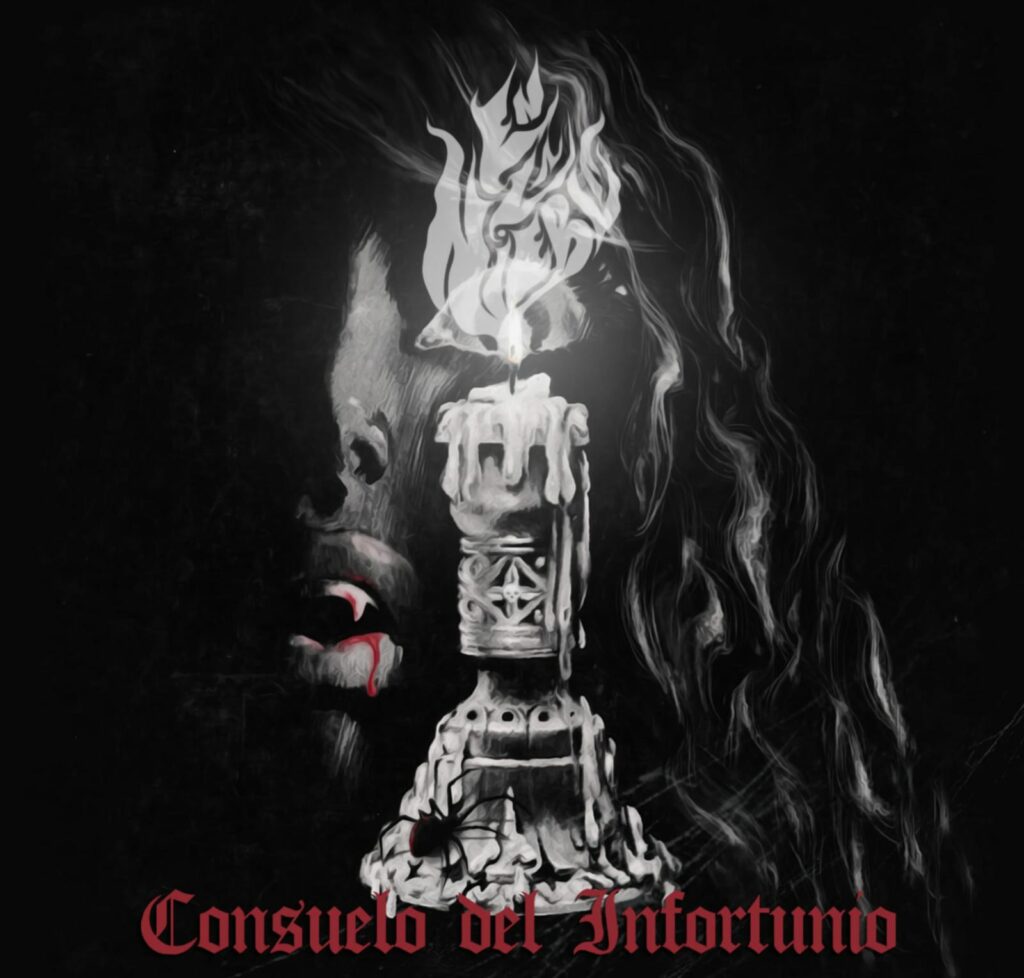
Matias Ghirlanda: We’re very happy to finally have “Consuelo del infortunio” out in the world. Releasing an album is always a special moment, but it’s also just the beginning of a new chapter. We’re still working hard to get the album heard by as many people as possible, sharing it with underground music blogs, radio shows, and listeners around the world. We’re also preparing two cassette editions of the album, one through Doomshire Tapes in the UK and another through Saturn Eye Records in the USA. So, there’s still plenty of work to do, but we’re enjoying every step of the process. For us, the most important thing is that the music reaches people who can connect with its atmosphere and darkness.
MO: The name of the album translates as “Solace in Misfortune”. Is there any story behind this name?
MG: The title has a personal connection with my interest in Argentine Freemasonry. I’ve always found the history and symbolism of Freemasonry in Argentina fascinating, and I was particularly drawn to the way “Consuelo del infortunio” sounds in Spanish. The expression has a certain poetic and almost philosophical quality to it. I liked the contrast between “consuelo” (’solace’ or ’comfort’) and “infortunio” (’misfortune’ or ’adversity’). It suggests finding some kind of comfort or meaning in the face of suffering and darkness. There isn’t necessarily a single story behind the title. For me, it was also about the atmosphere and the weight of the words themselves. Sometimes a name resonates with you before you can fully explain why, and that was the case with this one.
MO: In terms of names: Your band’s name translates to “in the fog”. Could you please tell me more why you chose this name?
MG: The name En la Niebla (“In the Fog”) was inspired by Jules Verne and the theories surrounding his possible connection to the Society of the Mist, also known as the Angelic Society, an esoteric tradition associated with hidden knowledge and symbolism. I was fascinated by the idea that Verne’s stories might contain secret meanings beneath the surface. Even the name Phileas Fogg, the protagonist of “Around the World in Eighty Days”, evokes the English word “fog”. This mystery inspired me to choose a name that reflects the hidden side of things, something that also resonates with the atmosphere of our music.
MO: And how much hidden symbolism did you find in Verne’s books?
MG: My first band, formed in 2015, was literally called La Sociedad de la Niebla (The Society of the Fog), inspired by the secret society that some researchers have linked to the works of Jules Verne. I was always fascinated by Phileas Fogg, the protagonist of “Around the World in Eighty Days”. His surname means “fog” in English, and some researchers interpret it as a possible symbolic reference to that society. Fogg is a reserved man, a member of an exclusive club, and a character surrounded by mystery. I believe that initiatory societies of that era, including Freemasonry, were more private and selective than many people perceive them to be today. There are many interpretations for those willing to investigate, and this connection between Verne, Fogg, and hidden knowledge was what inspired the name of my first band. Over time, that idea evolved and, in 2021, led to the creation of En la Niebla, my new and definitive project.
MO: I can see how this fits your image as a band. Your band is from Argentina, which is quite exotic country for a Polish person. Could you please tell me more about your country itself? Any unique features of the region you live in?
MG: That’s right. Argentina is a vast country – half of Europe could fit inside it – which is why its landscapes range from the jungles of the northeast to the high-altitude puna in the northwest, and all the way to glaciers and perpetual snow in the far south. In our own province, we have two distinct environments: the Humid Pampas, with their vast, endless plains, and, to the west, the rising Comechingones mountain range, named after the territory’s original inhabitants. To me, the landscape is deeply inspiring. The dense woodlands of algarrobo, tala, and espinillo trees inspire me to write and compose music. This forest ecosystem, known locally as the espinal, is rugged and harsh. After all, we all have thorns.
MO: I noticed Argentina has a strong stoner/doom scene: Fulanno, Astral Pigs, Mephistofeles, Pilotos del Tiempo, Luciferica, Drogula to name some from top of my head. Are you able to name the reason why you have so many awesome bands? Is this due to Argentina’s nature you mentioned, or is there something more?
MG: That’s an interesting question. I think the answer lies in Argentina’s rich rock and blues culture, which dates back to the 1960s and 1970s. That was when a distinctly Argentine identity in heavy rock began to emerge. If we had to choose three key pioneers, I’d say Manal, Norberto “Pappo” Napolitano (Pappo’s Blues, Riff), and Vox Dei. But the most interesting development came in the 1980s, when Ricardo Iorio founded V8, widely regarded as one of the first heavy metal bands in South America. Through V8 and his later band Hermética, Iorio’s legacy helped bring together the psychedelic and blues roots of early Argentine rock with the heavier sound of the 1980s metal scene. Those of us who are the children and grandchildren of that musical tradition inherited those influences and learned to use them to create our own bands, carrying that distinctive Argentine spirit forward while inevitably drawing on Black Sabbath’s sound, just as so many heavy bands around the world have done. I think that’s a fairly accurate explanation of the roots of Argentine heavy rock and how it evolved into the music we make today.
MO: I also heard that this heavy metal and heavy rock sounds were music of defiance during social turmoil caused by military juntas, that occured during Argentina’s history. What’s your opinion on this topic?
MG: I was born in 1989, so I didn’t experience those years firsthand, but they were a very dark period in our history. The bands I look up to stayed here and continued fighting against the military regime, rehearsing and playing in basements, while many other rock musicians went into exile abroad to escape the situation. It’s easy to write poetry from the comfort of Europe, as many artists did. That’s why I hold those who stayed here, like Pappo and Iorio, in such high personal regard. The military dictatorship was truly bloody, and it’s essential that we remember what happened and keep that memory alive.
MO: In terms of inspirations: Can you name your greatest inspirations in terms of music? Both Argentine and international? Besides the ones you already mentioned of course.
MG: My songwriting for En la Niebla draws inspiration from different art forms that fascinate me. I’m particularly drawn to the “Black Paintings” by Francisco de Goya, with their disturbing imagery, bleak atmosphere, and exploration of the darker side of human nature. I also love the horror films featuring Christopher Lee, especially his portrayal of Count Dracula, which helped define the image of gothic horror on screen. There is something timeless and deeply evocative about that world of shadows, ancient architecture, and ominous atmospheres. I’m equally fascinated by Argentine architecture and landscape design. The work of Francisco Salamone, the Argentine architect of Italian origin whose monumental Art Deco and Rationalist buildings transformed towns across the Pampas during the 1930s, has a striking, almost surreal quality. His cemeteries, slaughterhouses, and municipal buildings seem to emerge from another world. In contrast, Carlos Thays, the French-born landscape architect who became one of Argentina’s most influential figures in urban design, shaped the country’s identity through parks, botanical gardens, and public spaces, particularly in Buenos Aires. His work created a unique relationship between nature and the urban environment. Music is another essential part of my inspiration. Astor Piazzolla revolutionized tango by combining its traditional roots with elements of classical music and jazz, creating something intense, dramatic, and deeply personal. Atahualpa Yupanqui captured the vastness, solitude, and spirit of rural Argentina through his guitar and poetry, while José Larralde expressed the hardships, dignity, and philosophical outlook of working people in the countryside through his raw voice and uncompromising lyrics. On the heavier side, I draw inspiration from the electricity and weight of Tony Iommi, whose guitar work laid the foundations of heavy metal with Black Sabbath; Pappo (Norberto Napolitano), one of Argentina’s greatest blues-rock guitarists, whose playing had an unmistakable raw power; and Dave Mustaine, whose aggressive riffs and rhythmic precision helped shape thrash metal. I’m also influenced by Mark Sandman, the Morphine frontman whose minimalist, hypnotic bass lines and unconventional approach to rhythm created a dark, distinctive sound. When I talk about the Argentine music that moves me, I’m not referring only to musical styles. For me, understanding this music is also a way of understanding my country and the way we live in the Humid Pampas: its vast, seemingly endless plains, its rural culture, its melancholy, and the particular relationship people have with the land. These things become part of my perspective, even when the music I compose is heavy, dark, and far removed from traditional Argentine genres. All these influences come together in En la Niebla, not as direct quotations, but as different ways of creating atmosphere, tension, and emotion. I think of songwriting as a meeting point between visual art, architecture, cinema, landscape, and music – a way of transforming everything that fascinates me into something personal.
MO: Thanks for this insightful answer. It seems you also answered another question I wanted to ask you, about non-musical inspirations. I am very glad to hear that Argentina has such a strong cultural and art identity, you mention many artists and musicians I hear for the very first time, therefore you motivated me to learn more about them. In terms of gothic horror: I noticed that vampirism is a very popular theme for Argentinian stoner/doom bands, including En la Niebla. Why is this topic so interesting for Argentinian metal musicians? Is this inspiration drawn by the movies of late sir Chirstopher Lee you mentioned, or maybe there is some deeper connection with the darkness of your music and its underground personality?
MG: I think there’s a particularly fascinating story from Argentina that connects with this subject: Florencio Roque Fernández, known as the Vampire of the Window. His story became one of the country’s most disturbing criminal legends. According to the version repeated for decades, Fernández was a man from Monteros, in the province of Tucumán, who allegedly murdered fifteen women between 1953 and 1960. The legend claimed that he entered their homes through open windows, bit their necks, and was inspired by Dracula. It was even said that he was eventually committed to a psychiatric institution, where he died in 1968. However, later journalistic investigations found no reliable documentary evidence of the alleged murders. Although a man known as El Cangrejo appears to have existed, the story of Fernández as a serial killer seems to have been a fabrication that gradually became part of Argentine urban folklore. In a way, the legend itself became a horror story, blurring the boundaries between reality and fiction. I find this particularly interesting because it shows that Argentina has its own dark folklore, beyond the Gothic traditions imported from Europe. Of course, classic horror films, especially those featuring Christopher Lee as Dracula, have influenced heavy metal’s imagery enormously. But stories like this also show how local legends can develop their own atmosphere of mystery, fear, and fascination. For me, these themes fit naturally with stoner and doom metal. The slow riffs, heavy sound, and dark atmosphere allow us to explore death, forbidden desires, obsession, and the darker side of human nature. In En la Niebla, we’re drawn to that intersection between the sacred and the profane, the real and the imaginary. We don’t necessarily need to believe in the supernatural; sometimes, the stories people invent are dark enough on their own.
MO: That’s quite a story and fascinating explanation as well! Is En la Niebla a part of some greater stoner/doom scene or any metal scene?
MG: The stoner/doom scene is a difficult one to navigate, unfortunately. I believe many people have fallen into the traps of what I see as the hidden agenda behind Agenda 2030, while mainstream media and social networks have encouraged an increasingly individualistic way of life, driving people further apart. That is why we prefer to take an independent approach to organizing shows and building connections with bands that genuinely share our ideals, our way of thinking, and our principles. For us, it is about brotherhood, authenticity, and independence. We would rather build our own space than wait for anyone’s approval. Over the years, I have opened the doors of my own home to people, and I don’t take that lightly. Letting someone into your home is an act of trust; not everyone is willing to do that. I’ve listened to musicians talk about serious personal and family problems, and I’ve been there for them without expecting anything in return. All I ever expected was a little loyalty. Yet when that loyalty is betrayed, some people seem to expect you to carry on as if nothing happened, as though you have no right to feel hurt or disappointed. That is why today I think carefully about which bands and people I choose to share a stage, a bill, or an event with. I can’t bring myself to be fake or opportunistic, and I have no interest in networking for the sake of networking, playing politics, or lobbying for favors. If I go to see a band, it’s because I genuinely like their music, not because I want to wear a false mask, impress someone, or gain something from the relationship. I also believe in being straightforward with people. If someone calls me or sends me a message, I respond as soon as I can. I don’t believe in deliberately waiting a week to reply just to appear important or play some ridiculous social game. To me, that kind of behavior is completely idiotic. If you respect someone’s time enough to contact them, you should respect them enough to answer honestly and in a timely manner. At the end of the day, En la Niebla is about more than music. It’s about the people we stand beside, the principles we uphold, and the kind of relationships we choose to build. I’d rather have a small circle of genuine people than be surrounded by a scene full of masks, favors, and empty gestures. Independence means very little if you don’t have the integrity to stand by your own convictions.
MO: As you touched on quite a difficult topic, a follow-up question: Could you name the biggest challenges in being an underground band in Argentina? Is it difficult to obtain music gear, book a concert for your band, or release an album in your country if you are an underground act?
MG: It is not a contradiction with the previous answer; rather, these are two different issues. On the one hand, there is personal disappointment, linked to experiences with people who let us down; on the other, there is the professionalism of those who want to do their job well and contribute quality to the underground scene. In that sense, I would not say that it is particularly difficult to become part of the scene. You simply have to build connections with the right people. Although there is a great deal of self-managed work, there are also many people who genuinely want to do good things and contribute to the development of the underground movement. For example, some people we know are organizing a major festival in the mountains called Monte, featuring Mephistofeles as the headlining band. In Córdoba City, there are also venues and producers who work professionally and create opportunities for underground bands. In the interior of Córdoba Province, we also have places like Catalina Clandestina, a self-managed space that organizes wonderful shows. At one point in our career, En la Niebla was also part of that space, and we greatly value what they do for the local scene. So, although you have to put yourself out there, make connections, and be willing to do many things on your own, I believe that in Argentina there are people and spaces that make it possible to keep the underground scene alive. The key is to find those people, support one another, and continue creating together, without losing sight of the fact that personal disappointment does not invalidate the commitment and professionalism that also exist within the scene.
MO: In terms of playing concerts: have you ever played a gig abroad as En la Niebla?
MG: No, we’ve never played outside of Argentina. Maybe next summer we could play in Chile. We’ll see!
MO: Wish you luck! Almost all your songs have lyrics in Spanish, which is quite unusual from a European perspective, where metal music has mostly English lyrics. Could you please tell me the reason behind this language decision? And as follow-up: I noticed two songs from “Consuelo del infortunio” have English lyrics. Do you plan to write more material in English?
MG: In Argentina, it is actually quite unusual for rock bands, across the entire spectrum of the genre, to sing in English. Most bands sing in Spanish, incorporating expressions that are deeply rooted in our own culture. Argentine Spanish has its own particular character, with influences from lunfardo, the slang associated with tango, as well as expressions and ways of speaking inherited from the Argentine gaucho tradition. For us, singing in our own language feels natural because it allows us to express our identity, our surroundings, and our way of understanding the world. I understand that in countries such as Mexico, for example, it is more common for metal bands to sing in English, although, of course, there are plenty of exceptions. Regarding the two songs in English on “Consuelo del infortunio”, that decision was mainly influenced by how easily Manuel Re, our singer and guitarist, expresses himself in English. We decided to explore that possibility and incorporate it into our music. We are currently working on new songs for our next album, and we already have four compositions ready: three with English lyrics and one in Spanish. So, it looks like English will have a more prominent role in our upcoming material, while Spanish will remain an important part of our identity as a band.
MO: Cannot wait to hear this! What is the history of En la Niebla? How did you formed and did you pick stoner/doom genre on purpose, or it came just like this?
MG: The story of En la Niebla began in 2015 with an earlier project called La Sociedad de la Niebla. The name was inspired by Jules Verne and the idea of a hidden society, connected to mystery, esoteric symbolism, and the darker side of human history. From the beginning, there was a strong interest in creating something that went beyond music, with its own atmosphere, imagery, and identity. Over time, that original project evolved, and in 2021, En la Niebla took shape as the definitive form of that vision. The idea was never simply to start a stoner/doom band because the genre was appealing or fashionable. The music developed naturally through our way of playing: heavy riffs, low tunings, thick fuzz, dark atmospheres, and a raw, direct sound. Our identity is also deeply connected to where we come from. We are based in Oliva, in the province of Córdoba, Argentina, surrounded by the landscapes of the Humid Pampas and the native vegetation of the region. That environment, with its vast open fields, thorny trees, silence, and sense of isolation, is part of the imagery and atmosphere behind the band. In a way, the name En la Niebla reflects both a physical landscape and a state of mind. The current lineup represents another chapter in that evolution. As a trio, we have developed our own chemistry and a way of working together that allows the music to grow naturally. Our latest album, “Consuelo del infortunio”, reflects this stage of the band and brings together the different elements that have shaped our identity over the years. For me, En la Niebla is the continuation of an idea that started back in 2015. The name, the music, and the imagery have evolved, but the underlying intention remains the same: to create something dark, genuine, and deeply connected to our own cultural and artistic world.
MO: How do you create your music? Is it during jam sessions in rehearsal space, working and composing at home, or maybe a little bit of both?
MG: For this album, I wrote all the songs at home. I usually need a little inspiration, sometimes a glass of wine or a beer, and I just sit back on the couch with my guitar. Even though I’m the bass player, I really enjoy writing music on guitar. I start improvising until suddenly a main riff comes to me. From there, I build the verses, choruses, and bridges around it. Once the music starts taking shape, I look for a vocal melody and start writing the lyrics. Sometimes nothing comes out, and other nights I can come up with two songs. It all depends on my mood. I think when you’re feeling something intensely, you can come up with some really good stuff. After that, I record a demo and send it to my bandmates, so by the time we get together, we already have everything ready to work on the arrangements and put the songs together. We live about 140 kilometers apart, so we need to make the most of our rehearsal time. For our next album, Manuel Re is writing his own material, both the music and the lyrics, using the same approach. He’s really good at recording, so we set up a small studio in our rehearsal room. We’re always working on demos and trying out new ideas. Once everything is tight and we’re happy with how the songs sound, we record everything ourselves. This way, the whole process feels more organic, and with every release, we’re getting closer to the sound we really want. We can develop our own identity and have complete control over the music, from the first riff to the final recording.
MO: Being 140 kilometers apart each is quite a distance according to Polish standards. How often are you able to meet in flesh and work together on the music?
MG: Without fail, we get together once a week. It’s a special day that gives us something to look forward to and makes life a little easier. Beyond writing music, we get to spend quality time together as friends, chatting, having a few drinks, and sharing plenty of laughs. That’s what makes everything we do so enjoyable, and we always come together with enthusiasm and energy. In a relatively short time, we’ve written around 12 songs: the eight you already know, plus four new ones for the next album. We’re really happy doing what we love, and that’s why the 140 km journey is well worth it. When you’re having this much fun and creating something you believe in, the distance doesn’t seem so far.
MO: Sounds about right. Question in the name of all gearheads: could you please tell us what gear, instruments and guitar tuning you use in En la Niebla? If this is not top secret information of course!
MG: We play in Drop C tuning. As for me, I play a Squier Precision Bass that I bought back in 2004 for 200 Argentine pesos. It’s nothing fancy, but it sounds good and does what I need it to do. I add a little fuzz and play through a pretty standard Ampeg rig, nothing too sophisticated. Honestly, we’ve never been the kind of band that puts too much emphasis on gear or shows off the brands and models we use. The guys feel pretty much the same way I do about that. To us, what really matters is how you play, what you do with your instrument, and above all, the message you want to convey through your music. You can have the best gear in the world, but that doesn’t necessarily mean you have anything interesting to say. We’re much more interested in writing music, playing together, and finding a sound that truly represents us. At the end of the day, instruments are just tools for expressing our ideas, and we believe a band’s identity comes from making music, not collecting gear. Everyone has their own way of playing and understanding music, and that’s what ultimately gives our sound its character.
MO: How can your Polish fans support your band?
MG: First of all, a huge thank you to all our Polish fans for the amazing support, especially those of you in Warsaw, Kraków, Wrocław, Gdańsk, Poznań, Łódź, Katowice, and Lublin! It means a lot to us to know that our music is reaching people so far from home. The best way to support En la Niebla is to listen to our music, follow us on Spotify, share our songs with friends, and add them to your playlists. Every bit of support means a lot to us and helps keep the underground doom metal scene alive. Hopefully, one day we’ll have the chance to bring our music to Poland and share some heavy riffs with you in person. Much love to all our Polish fans! 🤘
MO: That would be amazing! The last question: What is your biggest dream as a band?
MG: Our biggest dream is to keep making music the way we want to, without ever losing what makes En la Niebla who we are. Of course, we’d love to take our music to other countries, meet people who connect with what we do, and share the stage with bands we look up to. But more than anything, we just want to keep making heavy, honest music that means something to us. If our music can reach someone on the other side of the world and make them feel something, then that’s already a huge achievement for us. We also want to say a massive thank you to everyone who listens to our music and supports the band, especially those of you following us from so far away. Coming from a small town in Argentina, it’s incredible to know that our music is reaching people in different parts of the world. It really means a lot to us. Thanks for supporting the underground, checking out our releases, and keeping the doom metal spirit alive. Hopefully, we’ll get to meet some of you in person someday, have a few beers, and share some heavy music together. Thanks again for the support, and keep it heavy! Long live doom metal and the underground! 🤘🏻