
Protomartyr have been maintaining a fairly regular release cycle for some time now. Since putting out one of their best albums in 2017, „Relatives in Descent”, they have released a new studio record every three years. So their seventh full-length arriving this year probably came as no surprise to anyone. That does not mean, however, that „Hotel Usona” feels like an obligation checked off the schedule, or even like a particularly typical Protomartyr album. Then again, the Detroit band arguably does not have many of those in its catalog. Not every record they have made is outstanding, but every one of them has a distinct identity. So what makes „Hotel Usona” different? The presence of horns? Sure, but those already appeared on 2020’s „Ultimate Success Today”. True – except back then the band used woodwinds such as saxophone, flute, and clarinet. This time there are even more aerophones, but almost exclusively brass: trombone and trumpet appear throughout most of the record. Does that really make such a difference? Absolutely. Six years ago, those additional instruments expanded Protomartyr’s art-punk sound with a streak of free-jazz abrasion. On „Hotel Usona”, the horns serve an entirely different purpose. This time, they help build a massive, powerful sound with an almost symphonic scale. While Protomartyr’s albums can differ significantly on a musical level, less changes lyrically. It is not quite fair to say Joe Casey keeps singing about the same things, but once again he is commenting on the world around us, with fewer personal accents and more attention paid to the current state of America – something reflected in the songs, or rather the rooms, of the titular hotel. And, as usual, it is not a particularly cheerful place.
We enter Usona willingly enough. Greg Ahee’s gentle, elegant guitar invites us in, followed moments later by a blunt declaration from vocalist Joe Casey: „Welcome back to the dream of a rotten mind”. Exactly. That final phrase, combined with Casey’s increasingly dramatic delivery over the lines that follow, makes it clear this will not be a relaxing stay. Even on the opening track, you can hear how important John Fridmann is to the album’s monumental sound. Across the record he handles a wide range of brass instruments – on „The Old Hotel”, for instance, flugelhorn and euphonium. Things begin to turn uneasy on „Sounds We Cannot Here”. Greg’s guitar grows restless, while Scott Davidson’s bass punctuates the rhythm with sharp precision. The brass section starts sounding almost apocalyptic as Fridmann adds French horn to the trumpet and trombone already in play. It all seems to foreshadow something unpleasant, yet in a way that still makes you want to find out what comes next. That tension contrasts with the vocal passages, where the music settles just enough to give Joe room to criticize social numbness and the effect algorithm-driven social media has on us – an idea pushed even further in the song’s video.
If I were the kind of person who kept album rankings and year-end lists, I could not yet tell you how high „Hotel Usona” would place. But I already know that the third track, „Converts”, would be very close to the top among the year’s best songs. And that is obvious from the very first note. I am not even sure how to describe the central guitar motif, because it produces such contradictory reactions in me. It is anxious but soothing; twisted yet fairly simple; awkward and oddly shaped, yet somehow incredibly beautiful. In fact, the entire song is built on contrasts. While Joe delivers a narrative alluding to J.D. Vance, Alex Leonard’s clearly defined low-end drumming and Davidson’s freely flowing bass dominate the arrangement. The spaces between them are filled mostly by lush cymbal work and, in contrast, much gentler horn parts that occasionally remind me of the arrangements heard in the Canadian project Destroyer. On „Exalted Eagles”, the sly lyrics about the increasingly unavoidable expectation that we rate, review, and provide feedback on almost every aspect of daily life are paired with perhaps the most classically cinematic arrangement on the album, especially in the parts handled by the guest instrumentalist. In his hands, trumpet, trombone, and French horn create a sarcastic soundtrack for writing comments, clicking likes, leaving reviews, and all the other exhausting little rituals that service providers and politicians keep asking us to perform. Well, good thing writing album reviews is probably not part of that criticism… and if it is, I disagree. It is a far nobler activity than any of the above.
„The Knife Dream” unfolds slowly, a dark story of violence in which Joe takes on, among other roles, the voice of a subconscious urging the song’s protagonist toward brutal aggression. Every instrumentalist helps maintain the atmosphere, drawing on much of the sonic arsenal used across the record. Greg is especially active here, bringing in synthesizers, several types of keyboards, xylophone, and tubular bells. Fridmann intensifies the palette even further with dramatic euphonium and flugelhorn parts. The whole thing ends on an uncertain motif caught in a loop. Like a good film, it leaves the rest for us to imagine. After several songs that may have moved more calmly but remained unsettling in different ways, the album shifts into a direct and heavy assault. „Feed the Sewer” sounds deeply invasive, with a guitar tone that recalls industrial music and noise rock, reinforced by rough, repetitive drumming. By the very end, that aggression becomes so concentrated – especially with Joe repeating the word „feed” in an almost inhuman way – that the song begins to resemble some more modern form of metal.
On „Lavender – Gospel”, the atmosphere becomes more restrained again – the brass disappears entirely – allowing its reflection on the brutality of war to come through more clearly. „Third Country”, meanwhile, addresses deportation policy and, although it also starts quietly, gains a little more dramatic force in its second half. The brass returns for the entire track, adding not only elegance to the lead passages but also supplementing the rhythm with more economical accents. After those two calmer songs, there is no more relief. Closing track „Checking Out” begins with neurotic guitar sounds and syncopated drums, later weaving together Joe’s committed vocals, haunting accents from John on French horn and trombone, and Greg’s ghostly synthesizers. Although all of those elements shift and evolve throughout the song’s more than seven-minute runtime, they never lose their essential character before the end.
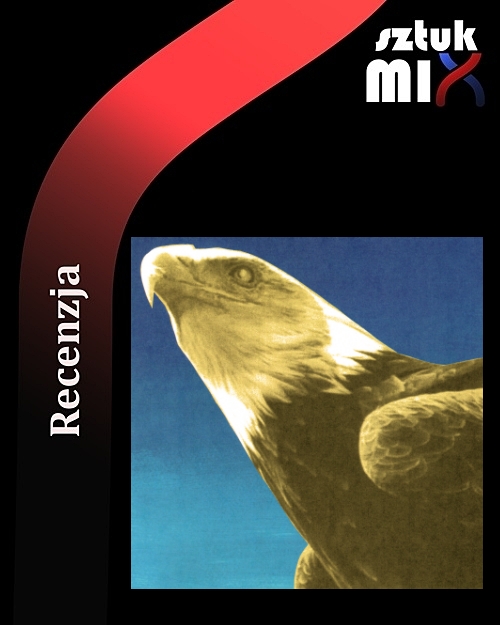
As I mentioned at the beginning, Protomartyr have been releasing consistently strong albums in recent years, but this time I get the sense that they really went the extra mile. They established a distinctive style long ago, yet they continue to introduce new elements into it. This time, the key name is one that has already appeared several times above: Fridmann. Even though I have focused on John and his role in the brass arrangements, it is impossible not to mention the person who brought him into the project in the first place. His father, Dave, handled the entire production and mix of „Hotel Usona” – and he is a major reason the album sounds as powerful as it does. The visual consistency is worth noting as well. Once again, the cover features a grainy photograph treated in a deliberately harsh way. This time, it shows an unnaturally yellowed eagle, a symbol of a declining America. Repeating certain patterns can become tiresome, but not with Protomartyr. Their ability to introduce new tools within familiar structures means that just after the release of this new album, I am already wondering what they will come up with three years from now. For the moment, though, I think I will stay a little longer at „Hotel Usona”.
Adrian Pokrzywka