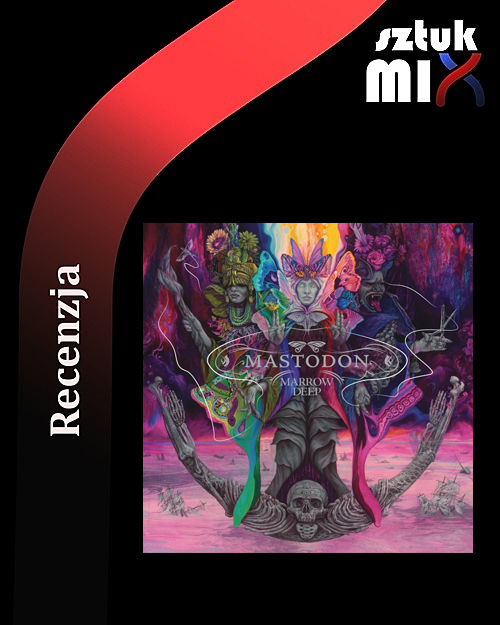
Mastodon have reached a point in their career where virtually every decision can be read as a statement. After twenty-five years with an almost unchanged line-up, the band lost one of the musicians most responsible for shaping their identity, while at the same time having to contend with yet more personal tragedy. The Americans’ ninth studio album could therefore easily have turned into either a defiant declaration that they could carry on without Brent, or a sprawling, hour-long musical epitaph. Thankfully, Marrow Deep, released on 28 August 2026 through Loma Vista Recordings, is neither. Across twelve tracks and roughly sixty-five minutes, Mastodon look back while making a clear attempt to move forward. There is no revolution on the scale of Crack the Skye, nor the monumental sweep of Hushed and Grim. What we get instead is a more focused, heavier record – at times surprisingly aggressive, and emotionally demanding throughout.
Recent years have certainly not been kind to the Atlanta musicians. Hushed and Grim, released in 2021, was already shaped to a considerable extent by grief following the death of the band’s longtime manager and close friend Nick John. An intensive period of touring followed, and in 2024 Mastodon joined Lamb of God to celebrate the twentieth anniversaries of Leviathan and Ashes of the Wake. One result of that collaboration was the single “Floods of Triton”, a track that feels particularly significant in hindsight: Brent Hinds was still involved, while João Nogueira – who would become a full-time member of Mastodon on Marrow Deep – had already entered the picture. Looking back, the song almost sounds like a bridge between two incarnations of the band. On 7 March 2025, Mastodon announced the end of their twenty-five-year partnership with Hinds. The official statement described the split as a mutual decision, something the guitarist himself would later firmly dispute. Whatever happened behind the scenes, it marked the end of the line-up that recorded eight albums and travelled all the way from underground sludge metal to Grammy recognition and the world’s biggest festival stages.
The story could have ended there on a bitter note, but not yet a tragic one. On 20 August 2025, Hinds was killed in a motorcycle accident in Atlanta at the age of 51, just five months after leaving the band. Before that, Brann Dailor had also lost his mother, Michele Jeanne Lawrence. Mastodon therefore returned to the studio carrying the full weight of grief, unfinished conversations and things that could no longer be put right. Nor have the musicians attempted to sanitise their own history. In “The Mastodon in the Room” and subsequent interviews, they spoke openly both about their love for their former bandmate and about the problems that ultimately caused their relationship to collapse. That honesty makes “Your Ghost Again” hit harder than the average song written for a deceased friend. “Out Like a Lamb”, meanwhile, primarily addresses the death of Dailor’s mother. The phrase Marrow Deep itself appears nowhere in the lyrics; according to the drummer, it describes bonds so profound that they reach “into the marrow”. Hinds is therefore a constant presence throughout the record, despite not playing a single note on it.
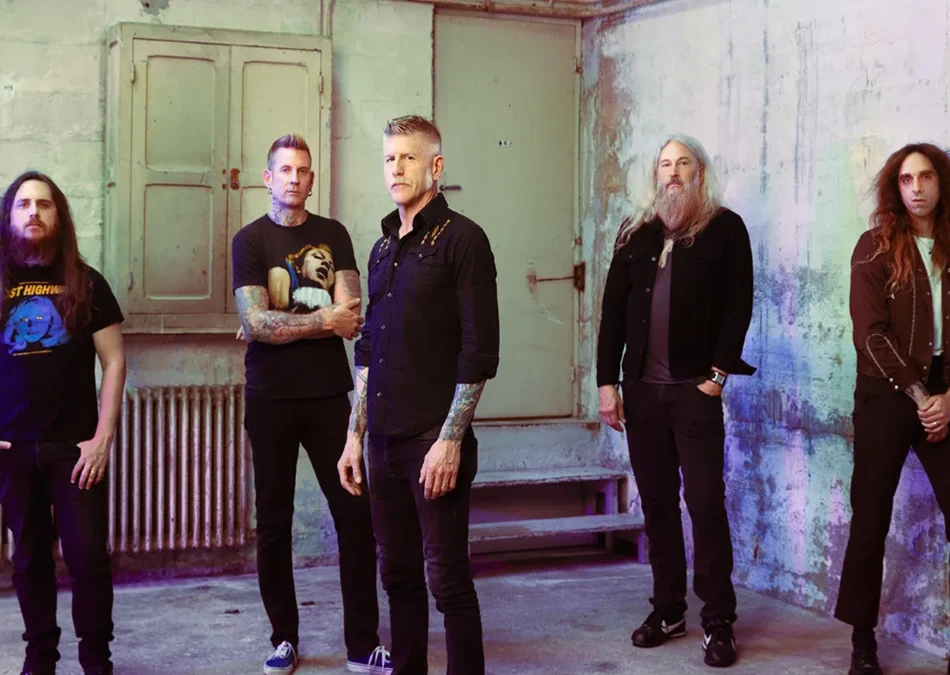
Musically, Marrow Deep initially comes across as a decisive swing back towards Mastodon at their heaviest. “Barbarians Blood” dispenses with any kind of slow build: Dailor immediately tears into the kit, the guitars crash in moments later, and the track begins to twist and lurch with the kind of rhythmic unease that has long been one of the band’s trademarks. The deeper you get into the record, though, the more obvious it becomes that any supposed return to their roots tells only part of the story. Nick Johnston makes no attempt to mimic Hinds’ raw, volatile unpredictability, and the album is all the better for it. His playing is cleaner, more technical and more overtly progressive, creating a different kind of interplay with Bill Kelliher’s dense, crushing riffs. Nogueira’s contribution is arguably even more transformative. The keyboards are no longer an embellishment buried somewhere in the background, but a fully integrated part of the arrangements. As a result, tracks such as “Golden Spires”, “Moth and Bone” and “Snakes for Dinner” carry echoes of psychedelia, 1970s progressive rock, Pink Floyd and even latter-day Opeth. Co-producers Patrik Berger and Kurt Ballou do an excellent job of binding these two worlds together: Marrow Deep can be brutal, but it has no intention of being merely brutal.
The album’s greatest strength, however, lies in how often its musical ideas amount to something more than another great riff or an impressive name on the guest list. “Your Ghost Again” remains the record’s emotional centrepiece, “Moth and Bone” develops beautifully from its keyboard-led opening into an increasingly heavy arrangement, while “Golden Spires” demonstrates just how effectively the new line-up can marry technical prog with melody. The guests are more than decorative additions, too. Josh Homme appears on “Snakes for Dinner”, while Randy Blythe and Nate Newton add extra muscle to “A Vampire’s Demeanor”, but the real gem is “The Vanishing”. The track opens with Black Sabbath legend Geezer Butler on bass, before Gojira’s Joe Duplantier joins the fray. Almost immediately, the entire piece begins to breathe the spirit of Sabbath: the leaden weight, ominous atmosphere, psychedelic shading and the way the riff unfolds all evoke the Birmingham pioneers without ever slipping into cheap imitation. Butler’s presence feels like an organic part of the composition rather than a novelty in its own right. Closing track “The Three Fates”, featuring Clutch’s Neil Fallon, then brings the album’s preoccupation with death full circle through its reference to the three Fates who cut the thread of human life.
That does not mean Marrow Deep solves every problem Mastodon face. At sixty-five minutes, it is still long enough to make you wish the band had been slightly more ruthless when selecting material. The album is more cohesive than Hushed and Grim, but “They’re Coming for You” and even the striking “A Vampire’s Demeanor” lack, for me, the distinctive personality of “Your Ghost Again”, “Golden Spires”, “Moth and Bone” or the closing pairing of “The Vanishing” and “The Three Fates”. The latter also flirts with excess: after the outstanding “The Vanishing”, there is a sense that the album has found the perfect place to end, only to open the door one more time. More significant, however, is the absence of Hinds. Not in purely technical terms – Johnston performs superbly – but as a source of unpredictability. Hinds brought country, blues, psychedelia, his own distinctive voice and the sense that something completely at odds with the rest of the song might suddenly happen and, somehow, still work. This new version of Mastodon is more disciplined and controlled, and there are moments when that carefully managed chaos is precisely what you begin to miss.
Ultimately, Marrow Deep proves far more interesting than an album designed simply to demonstrate that Mastodon could survive Brent Hinds’ departure. They have survived, but they make no attempt to pretend they emerged from the experience unchanged. They do not try to find another Hinds, they do not erase his importance from the band’s history, and they do not reduce their complicated relationship to a simple remembrance of a fallen friend. Musically, this is a transitional record, but in the best possible sense. It carries plenty of the old power of Leviathan and Blood Mountain, the progressive imagination of Crack the Skye and the melodic instincts of latter-day Mastodon, while adding Nogueira’s expansive keyboard textures and a more disciplined dialogue between the guitars. Not every track lands with equal force, and I am not yet convinced that the new line-up has found its own equivalent of the extraordinary chemistry built over a quarter of a century. Marrow Deep, however, makes a compelling case that the search itself could take Mastodon somewhere genuinely fascinating. Brent Hinds remains part of Mastodon’s marrow, but the band’s skeleton is still strong enough to carry the weight of whatever comes next.
Szymon Pęczalski