
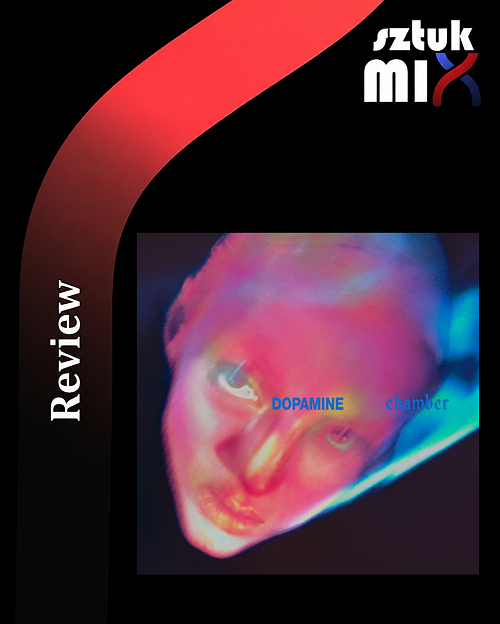
„Romance” proved to be a genuine breakthrough for Fontaines D.C. „Starburster” and „In the Modern World” have firmly established themselves in the Irish band’s catalog, revealing a more immediate and accessible side of their music. After such a successful record, it would have been reasonable to expect the group to build on that momentum and continue developing a proven formula. Instead, Fontaines D.C. make yet another stylistic turn, responding to the unsettled times we find ourselves living through. Post-punk is now firmly behind them. If it were not for the melancholy, pervasive darkness, and characteristic sense of unease, there would be moments when it would be difficult to recognize the band that only a few years ago made „Dogrel” or „A Hero’s Death”. On „Dopamine Chamber”, electronics, looping motifs, prominently featured bass, and sweeping synthesizer passages dominate the sound. The first half of the album draws heavily from the aesthetics of the 1980s, though this is anything but a straightforward exercise in nostalgia.
I have seen comparisons to Depeche Mode and Massive Attack, but personally I do not hear quite as much of either band here. The Cure comes to mind far more often, and at times even Nirvana. Fontaines D.C. draw from a wide range of influences without ever sounding as though they are trying to imitate any of them. Acoustic instruments, electronics, and loops bleed into one another, creating a sound that feels both familiar and surprisingly fresh. Album opener „Six Shot Morning” makes it clear immediately that the Irish band has no intention of playing it safe. It is a brilliant, propulsive, trance-like track driven by a powerful bass line and synthesizers. Hypnotic, melancholic, slightly dreamlike. It is hardly the most obvious choice for an opening song, which is precisely why it works so well. „Marianne”, meanwhile, has all the makings of a major hit – its chant-like lyrics and beautiful chorus serve as a reminder of just how much Fontaines D.C. now have to offer melodically.
And since we are talking about melody, Grian Chatten delivers on this album like never before. His vocal ideas can be unconventional and surprising, but they can also be simple and genuinely beautiful. „Mimesis” sticks in the mind after a single listen, while its distinctive keyboards make it sound as though it could have been lifted from the catalog of some forgotten 1980s band. „Demolition”, on the other hand, feels built for stadiums. The emotion explodes at the very beginning of the verses rather than waiting for the chorus. There is something of the Nirvana comparison mentioned earlier in that approach – the same ability to combine raw energy with melody that stays with you long after the song ends. Elsewhere, even rap elements appear, as on the excellent single „Tongue”.
From around „One Man” onward, the album begins to slow down noticeably. Electronic textures and forceful rhythms gradually give way to calmer arrangements, while acoustic instruments start playing a much greater role. The music becomes more intimate without losing any of its emotional intensity. „Where Is Gone”, recorded with Rosalía, is especially surprising. Fontaines D.C. and the Spanish pop star on a ballad? It is hardly a pairing anyone could have predicted, yet it works remarkably well. The song sounds as though it were written with the next James Bond movie in mind.
Grian Chatten looked for inspiration while traveling through Europe alone. Judging by the lyrics, the weather did not exactly cooperate, because rain and bleak imagery appear repeatedly throughout the record. A recurring theme of separation also runs through several songs. „Dopamine Chamber” is therefore very much an album on the dark side, but the contrast between the darkness of the lyrics and the beauty of the melodies is one of its greatest strengths. Chatten can write about difficult emotions in a way that pulls the listener in rather than overwhelming them. I also like the way the album ends. „Intimate” is as unconventional a finale as „Six Shot Morning” was an opener. The two songs share a hypnotic, melancholic, dreamlike atmosphere. Together they create a kind of structural bookend, even though neither sounds like a conventional opening or closing track. Fontaines D.C. avoid predictable solutions even at the level of the album’s overall construction.
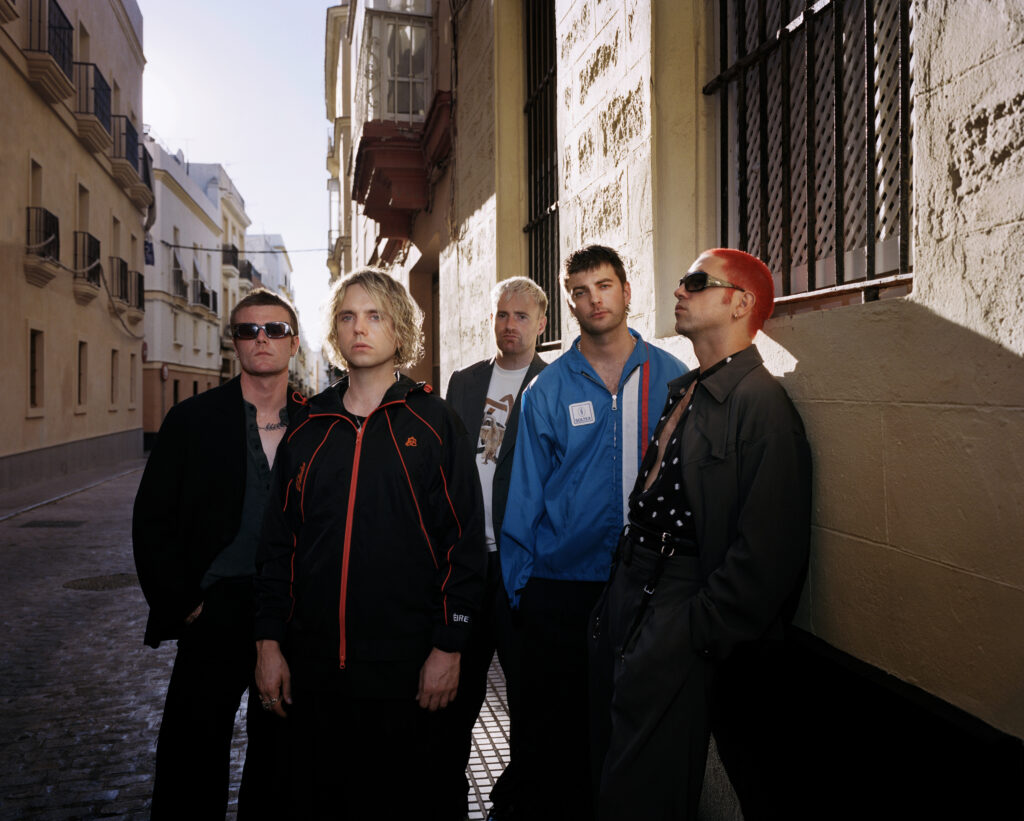
On „Dopamine Chamber”, the band takes considerable risks. It experiments with sound, song structure, and style, venturing into territory we have never really heard it explore before. Most importantly, the majority of those experiments work. The risk clearly pays off. Is this Fontaines D.C.’s best album? I am not sure yet. „Romance” may have had more obvious hits, but the new record is bolder, more varied, and in many ways more mature. I find myself thinking of The Cure’s „Disintegration” – not because the two albums sound alike, but because of the way melancholy, atmosphere, and exceptional melodies come together to form a cohesive emotional whole. And is „Disintegration” The Cure’s best album? You do not necessarily need an answer to that question in order to appreciate the greatness of either record.
Fontaines D.C. are now the biggest Irish band since U2, and it is becoming increasingly difficult not to see them as one of the most important groups of this decade. „Dopamine Chamber” only strengthens that position. Amid all the noise, anxiety, and pervasive sense of things falling apart, they have managed to create something honest, beautiful, and deeply emotional. Music that never stops moving. And perhaps that is what impresses me most today: Fontaines D.C. could easily play it safe and simply capitalize on the success they have already achieved, but they seem far more interested in discovering how much further they can still go.