

Nine years. That is how long it took Europe to return with a new studio album – a band that, in the minds of many listeners, is still primarily associated with one of the biggest hits in rock history. It is hard, of course, to downplay the significance of „The Final Countdown”, but reducing the Swedish group’s entire body of work to that one song would simply be unfair. Especially when you consider the post-reunion era, which has produced several genuinely excellent releases. The most recent of those, „Walk the Earth”, arrived in 2017 and further developed the direction the band had taken on „War of Kings”. Expectations for its successor were therefore considerable, particularly since nine years is more than enough time for both musical influences and approaches to songwriting to evolve. „Come This Madness”, Europe’s twelfth studio album, does not bring a revolution – and that is probably a good thing. Instead, we get the band’s trademark melodic instinct combined with a heavier, more organic sound, expansive arrangements, and, at times, outright progressive ideas. The result is not only interesting, but above all shows a band that still wants to keep developing its own musical language.
The story behind „Come This Madness” is more complex than it might initially seem. The material was not created during one intense writing session, but developed gradually, with band members living in different places exchanging ideas, riffs, and song sketches over time. Some of those ideas go back considerably further. A good example is album opener „One on One”, which grew out of material Joey Tempest and John Levén had been working on for several years. In 2023, the group released the single „Hold Your Head Up”, recorded in collaboration with Klas Åhlund and presented at the time as an early taste of the upcoming album. The song ultimately did not make the standard tracklist, which says a great deal about how much the concept of the record evolved as work progressed. Europe were hardly focused on writing alone, either, and continued to appear regularly onstage. The long gap between releases did not amount to artistic inactivity so much as it gave the band enough distance to assess the material it had been collecting.
Tom Dalgety had a major influence on the album’s final shape. The producer, known for his work with acts including Ghost, Opeth, Pixies, and The Cult, did more than simply oversee the technical side of the sessions, taking an active role in arranging and developing the material as well. Joey Tempest even referred to him as Europe’s sixth member, which gives a good sense of how deeply involved he became. The recordings took place at RMV Studio in Stockholm, founded by Benny and Ludvig Andersson, while the mix was handled by Mike Fraser, whose credits include AC/DC and Van Halen. There are guest appearances as well: Ghost’s Tobias Forge and Opeth’s Mikael Åkerfeldt contributed backing vocals, with Åkerfeldt also adding his unmistakable growl to „Scandinavian Eyes”. Opeth guitarist and close Forge collaborator Fredrik Åkesson also took part in the sessions. Importantly, however, those names never become the album’s main selling point. The guest parts are integrated into the arrangements so naturally that Europe always remains front and center. The production works in a similar way – it gives each musician plenty of room, allowing even the more elaborate passages to retain clarity.
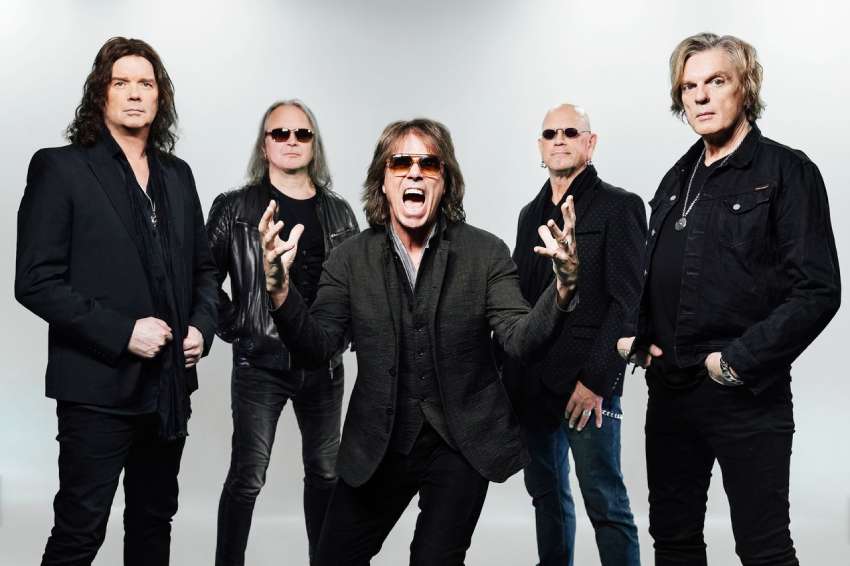
„Come This Madness” makes a very strong impression from its opening minutes, though not necessarily for the reasons one might expect from a band responsible for so many melodic classics. There are plenty of catchy choruses and distinctive guitar lines, of course, but Mic Michaeli’s keyboards and the work of the rhythm section draw just as much attention. „One on One” opens with an almost cinematic introduction before a heavy, pulsing bass line takes over the foreground. „The Cult of Ignorance” combines a hard-rock riff with synth textures and an exceptionally immediate chorus, while the title track takes the album into darker territory, evoking the spirit of 1970s hard rock – particularly Deep Purple. The calmer „This Time of Year” gives Joey Tempest’s more emotional vocal side room to breathe, while „In a Different World” restores some of the weight and momentum. „Scandinavian Eyes”, however, deserves special mention: its monumental introduction, commanding riff, and elaborate arrangement make it one of the most compelling moments on the entire album. This is where it becomes clearest that Europe have no interest in limiting themselves to the familiar verse-chorus formula. The band allows itself greater freedom without sacrificing the melodic instinct that has always been one of the foundations of its music.
The greatest strength of „Come This Madness”, however, is the sense of a band functioning as a true unit. John Norum is obviously in excellent form, but his guitar parts – sharp, melodic, and instantly recognizable – remain in service of the songs rather than dominating them. The other musicians are just as important. John Levén delivers a firm, clearly defined bass sound, Ian Haugland controls the rhythmic pulse with precision, while Mic Michaeli has been given considerably more space to develop his own ideas. At times, the dialogue between guitar and keyboards becomes one of the album’s most interesting features. The following tracks also highlight that variety: „Takin’ It Back” is a classic, direct hard-rock song with a chorus made for the stage, „The Devil’s Back” is built around a heavy groove with a slightly swaggering feel, while the brief „In the Absence of Grace”, based primarily on piano and vocals, provides a much-needed moment to breathe. Closing track „Nothing Can Follow This” opens the form up again, using spacious keyboards, interesting rhythmic ideas, and impressive guitar work. The classic-rock influences – Deep Purple included – are obvious, but rather than sounding like imitation, they are filtered through Europe’s own sensibility. As a result, the album remains cohesive without collapsing into a sequence of interchangeable songs.
If I were to raise any minor objections, they would mostly concern the distribution of the album’s strongest moments. The first half sets the bar extremely high, offering an almost uninterrupted run of memorable riffs, catchy melodies, and interesting arrangement choices. The quality remains solid afterward, but not every song leaves quite as strong an impression. For me, „The Angels Must Have Flown” and „The Devil’s Back” do not carry the same impact as „The Cult of Ignorance”, „One on One”, or „Scandinavian Eyes”. I also have a slight reservation about the production, which at times seems a little too committed to making everything sound monumental. It is clear, spacious, and powerful, but a little more rawness could have sharpened the contrasts between individual songs even further. I feel similarly about the guest appearances. The names of Forge and Åkerfeldt certainly spark the imagination, but outside the Opeth frontman’s distinctive growl, their presence remains relatively understated. Still, it is difficult to regard that as a serious flaw when it helps ensure that the album never loses its own identity as a Europe record.
„Come This Madness” proves that Europe are still capable of making worthwhile music without constantly looking back at the greatest successes of their past. The Swedes skillfully combine classic hard-rock melody with a heavier sound, expansive arrangements, and carefully measured progressive elements, while making no attempt to force themselves into contemporary trends. They are still using a musical language they have known for decades, but they know how to shift the emphasis within it. Not every song hits with the same force, and the production could occasionally benefit from a little more dirt, but the album is difficult to fault for its cohesion, maturity, or strong songwriting. I would not place it alongside Europe’s greatest achievements, but I would have no hesitation in calling it a successful entry in their discography. After nine years of waiting, the band chose neither the safe recreation of familiar ideas nor revolution for revolution’s sake. Instead, they made an album that develops naturally out of everything they have done before. And that is probably exactly what we should expect from Europe today – not another „The Final Countdown”, but strong, mature music that reminds us their story has long since become about far more than one timeless hit.