
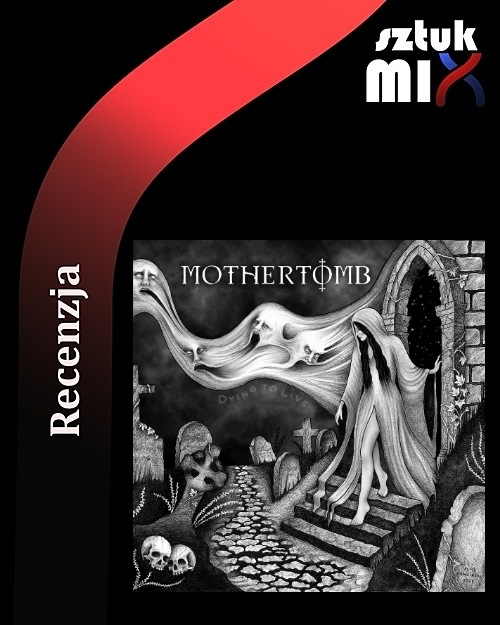
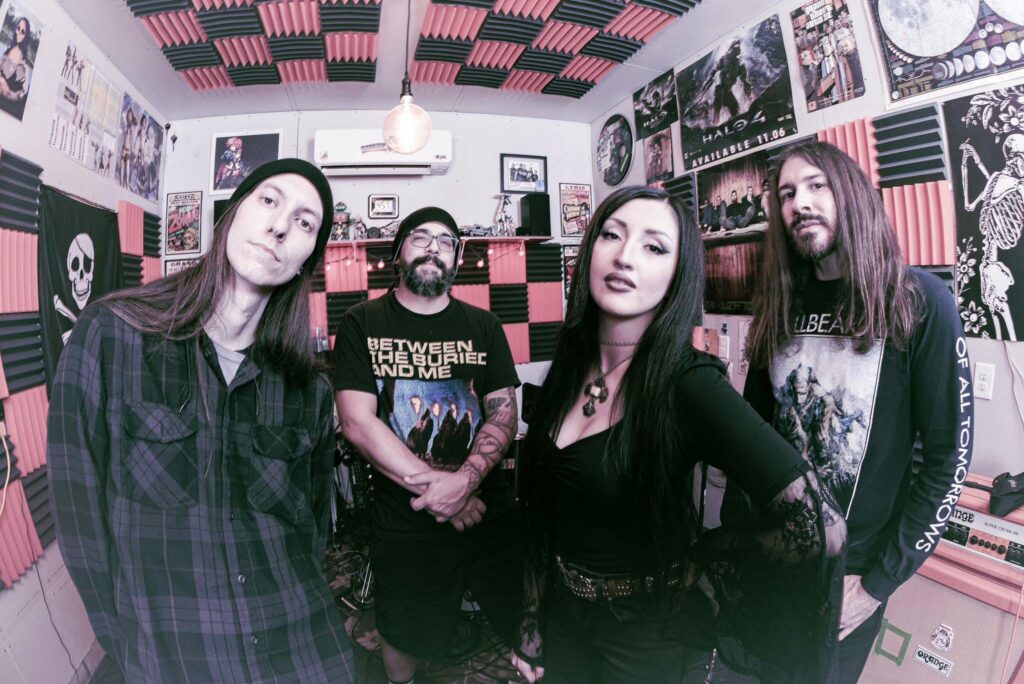
Deep in the forests of northern Michigan, a quartet with an exceptionally bleak name came into being: Mothertomb. The inspiration behind it, however, was not grief or the death of someone close, but the storm of the century that struck Michigan in April 2025, leaving many people – including the musicians themselves – without power for weeks in extraordinary cold. Watching the destruction the storm inflicted not only on human settlements but on the wilderness itself, the band came to feel as though Mother Nature were preparing her own grave. The title of their debut album adds another grim layer to that imagery: „Dying to Live” is hardly an optimistic phrase by nature. It brings to mind the undead, vampires, and other creatures caught somewhere between life and death.
The darkness does not end with the names. „Dying to Live” is a bleak, sorrowful, and bitter mixture of stoner doom infused with progressive, psychedelic, and gothic elements. Its building blocks include a powerful female voice presented in many different forms – from hypnotic incantations and majestic, commanding clean vocals to screams and growls; guitars that can both crush and ignite the imagination; and a rhythm section capable of pulling the listener in with an enormous groove before twisting the mind with fractured, off-kilter patterns. There are mammoth riffs here, but also progressive-psychedelic excursions, all shaded with a certain gothic darkness. The album itself reminds me of fog as a natural phenomenon: mysterious, disorienting, something that forces you to slow down and examine your surroundings more carefully. Listening to „Dying to Live” in that way is rewarding, because the record is packed with small sonic details waiting to be uncovered.
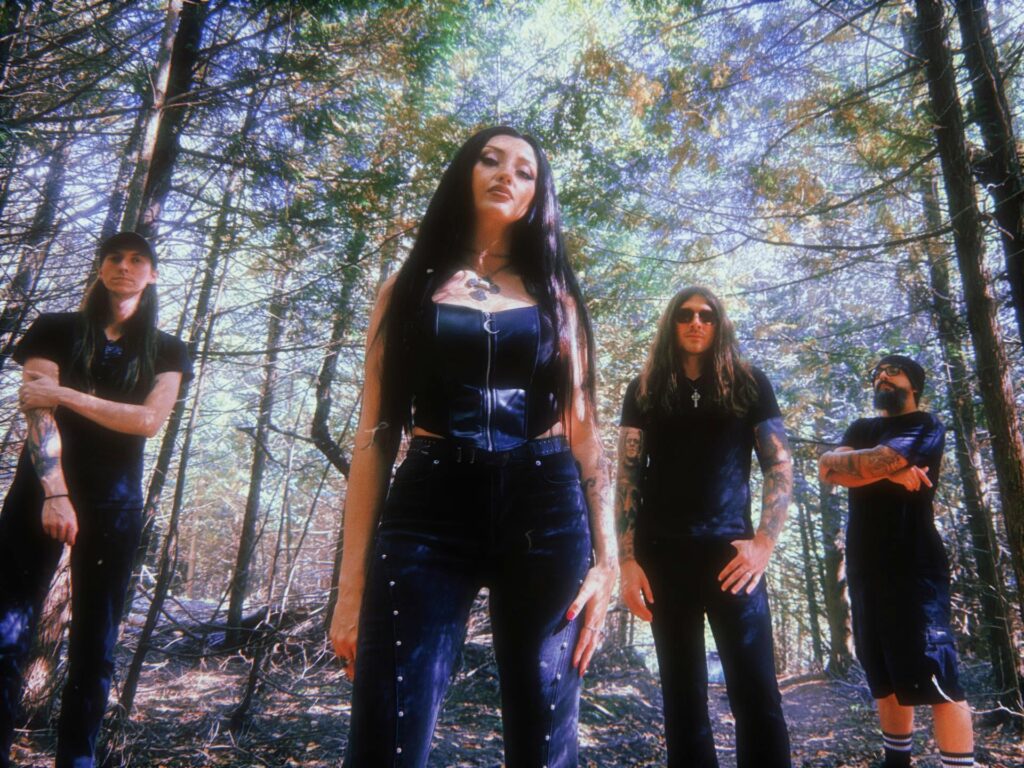
The music heard on this debut was created entirely by the band, including the mixing, mastering, and release itself. The visual side, meanwhile, was handled by the vocalist, making „Dying to Live” a genuinely DIY release in the fullest sense of the term. There is a great deal of joy in playing and a genuine love of creation running through the record, which makes it remarkably easy to get hooked from the opening note to the final sound. And once it gets into your head, it refuses to leave. The production is dense yet clear, perfectly suited to the constant interplay of light and darkness that seems to define the band’s music.
The album consists of five extended compositions running for just under forty minutes in total. Opening track „The Summoning” is filled with dark, ominous sound. I can easily imagine its introduction scoring a scene in which a spirit awakens somewhere deep inside a crypt. The intriguing contrast between a repetitive, unhurried melody, a fluid rhythm section, and haunting vocalizations creates an atmosphere that feels mysterious and ritualistic. That sensation only intensifies as the music gradually thickens, eventually giving way to a droning, massive riff and increasingly elaborate rhythmic passages.
Just when it seems the final sounds of the opening track are disappearing into nothingness, „Cythraul” emerges from the dark. And I mean that quite literally. Slowly and without any sense of haste, the voice and instruments weave a dark, unsettling tapestry out of sound. At first the song is melodic and almost mystical, but over time it builds into a genuine wall of crushing heaviness, only to begin hypnotizing the listener with motifs carrying an Eastern flavor before growing dense once again. The sheer number of ideas, shifts between light and darkness, and changes the band manages to fit into less than ten minutes is genuinely impressive. Even more impressive is that it still feels like one coherent song. The word „cythraul”, incidentally, means „devil” or „evil spirit” in Welsh.
„Beware” carries both a sense of calm, ceremonial ritualism and an abundance of irresistible grooves, gripping riffs, and sheer weight. The way these two different shades of heaviness play against one another pulls me, as a listener, deeper and deeper into the track until my mind feels transported somewhere far beyond this world. It is psychedelic, nightmarish, dark, and thoroughly bad-trip in character. An absolute masterstroke.
„Mountain Hag” genuinely sounds like a tale about a witch living somewhere in the mountains. It opens with a slow, psychedelic melody and vocals drenched in so much reverb that they seem to alter your perception of reality. It is also probably the most progressive track on the album, constantly shifting through larger and smaller changes and fractured rhythmic ideas. None of that disrupts the song’s overall flow, though. Quite the opposite: it moves bleakly forward at its own pace, sometimes slowly, sometimes with a little more urgency, sometimes more ecstatic, sometimes more trance-like. There are even moments of respite, offering a brief chance to soothe frayed nerves.
The debut closes with the title track, probably the most immediately head-nodding song on the record. Here, the band combines dense riffs with a deeply melancholic atmosphere, creating something both extraordinarily heavy and irresistibly physical – the body remains in constant motion while the soul seems to drift somewhere else entirely. The verses are pure crushing weight, the chorus carries a huge sense of transcendence, and by the end it feels as though the ground itself is shaking. I have a feeling this one could be an absolute banger live. Hopefully, one day I will get the chance to find out.
I have no idea how many times I have played this album since its release. I had been eagerly waiting for it, convinced by the singles that something truly worthwhile was coming, and I was not disappointed in the slightest. If you have forty minutes to spare and feel like letting a riff carry you into another dimension, do not hesitate – put on „Dying to Live”. With a debut this strong, all that is left to do is wait for whatever Mothertomb comes up with next.