
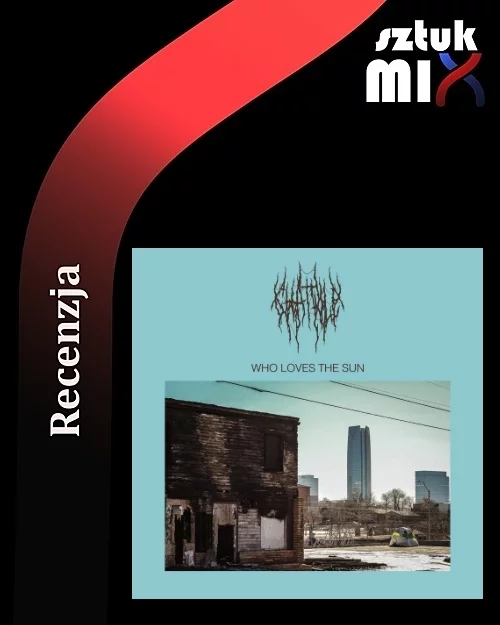
Chat Pile made a name for themselves a few years ago with an original combination of sludge heaviness, noise-rock abrasion and elements drawn from several other guitar-based styles. The Oklahoma band’s 2022 debut already made a considerable impact among alternative music fans, while their broad stylistic range and the seal of quality associated with The Flenser helped them reach the stages of numerous cult European festivals, from Roadburn and Primavera to OFF Festival in Katowice. Who knows – perhaps that gradual expansion helped set the tone for what followed. Where their debut focused on a bleak diagnosis of the social condition of their fellow Americans, the second album, released in 2024, broadened its scope to more global concerns, still viewing them with little optimism. The lyrical outlook did not change so much as shift its focus, while the music itself underwent a subtle transformation, becoming more polished and rhythmically less chaotic, with noticeably more space opening up within the compositions. Released today, „Who Loves the Sun” seems to push that direction even further – both lyrically and musically.
Opening track „Creature” already begins on a restrained note. The drums and bass may still hit with authority, but they remain controlled, while the guitar parts are similarly gentle. One of Chat Pile’s defining characteristics – contrast – is most clearly heard here in the vocals: Ray’s pleasant clean singing is repeatedly broken apart by his screams in the choruses, although even those subside towards the very end of the track. Perhaps it is all preparation for „Deep Blue”, which was chosen as a single for good reason. There is an almost Nirvana-like immediacy to it, coupled with a universal piece of social commentary. The song attacks our dependence on screens, which have slowly stripped away part of our humanity. After all, it was through them that we invited a technological landfill directly into our homes. And yet, for all the song’s unmistakable hopelessness, the omnipresent sadness – both in the lyrics and in the melancholy of the central guitar riff – is genuinely beautiful.
„Same Rules” is the point at which bassist Stin creates not so much a rhythmic motif as a second lead riff, acting as a counterweight to Luther’s delicate guitar part. It is an excellent example of how Chat Pile have simplified their rhythmic language: there are far fewer abrupt twists, the transitions flow more naturally, and the music becomes more immediate, allowing the emotional weight of the lyrics to come through with greater clarity. Of course, the Americans have not forgotten how to play heavy music. „PEN I S MALL” is not only faster but genuinely crushing – essentially a full-blooded sludge track. Packed with furious screams and featuring no clean vocals whatsoever, it is the only such moment on the album. Perhaps that is for the best, because not everyone will immediately catch the tragic, painfully true and painfully literal message concerning so many human lives: „Hard to think but your whole life can pass, as a series of acts of subordination”. The song draws on the Chat Pile frontman’s own experiences from his days working in a shopping mall. Can reading books during a boring shift really be considered an offence? According to the main character of this single, apparently so – Greg was more than happy to report Ray to their boss for that and other supposed misdemeanours. And it is presumably Greg who inspired the titular… whatever exactly the title is supposed to be. It is also a good moment to point out that, despite the generally bleak subject matter of their lyrics, the Americans have by no means abandoned their sense of humour.
I have already mentioned contrasts, and this is the point at which one of them begins to define the album as a whole. The guitar work in „Shrine” lodges itself in the mind from the very first listen. The track probably contains some of the finest riffs on the record, while also providing another example of the band’s vocal balancing act, with beauty and ugliness complementing one another within the same song. In the end, the latter is softened by the lighter passages, and the album’s growing accessibility moves firmly into the foreground. Even its most brutal moments somehow sound inviting. And that is not the end of it, because on the following „Intruder” the guitars become almost surf-rock in character. Combined with Ray’s restrained vocals, they create a sinister kind of grotesque: the narrator here is a ghost haunting the living. The song’s pop sensibility is further emphasised by the genuinely pleasant and skilfully integrated vocals of Claire Hannah and Brittany Sawtelle from Nightosphere. Not even the ghost’s desperate howl halfway through the track, or the brutal weight of the bass, can completely disrupt this strangely idyllic atmosphere.
A little more needs to be said about „Christabel ʼ26”, where the monstrous rumble of the bass once again clashes with the lighter tone of the guitar. Although it begins with a waltz-like motion and growled vocals, the more subdued singing later on once again lifts some of that weight – sonically, at least. In every other respect, this is the album’s most doom-laden moment, bleak not only musically but lyrically as well. The song brings the story of Christabel from Samuel Taylor Coleridge’s poem into the present day. In the original work, the title character represented a kind of innocence – naïve, perhaps, but pure and genuine. She was the wronged and manipulated party, her life force effectively becoming nourishment for darker powers. In 2026, Chat Pile see Christabel as something broader: a collective symbol of how the most honest – and often the poorest – people become those most easily exploited and turned into victims. Even the name originally devised by the poet, combining „Christ” and „Abel”, was hardly accidental, and the Oklahoma musicians now bring that symbolism into a contemporary setting.

After the Nightosphere guests briefly return on the grunge- and stoner-groove-driven „Influence”, the album moves into a track that feels highly representative of Chat Pile’s overall style, not merely of this particular record. „Family Funeral” combines unruly, slightly shrill noise-rock guitars with a sludge-metal rhythm section built around brutal bass and thunderous drumming. The lyrics deal with the trauma of a relationship falling apart, but the subject can also be read in a broader context – as a reflection of modern society’s increasing emotional numbness, something Ray underlines desperately through his constantly shifting vocal techniques. It may well be his strongest performance on the album. Everything is then brought to a close by an acoustic, campfire-like grunge ballad that offers a chance to recover after the preceding emotional and musical blows, allowing a little optimism to enter at the very end. Because goodness, after all, still exists in a world that is becoming increasingly difficult to live in.